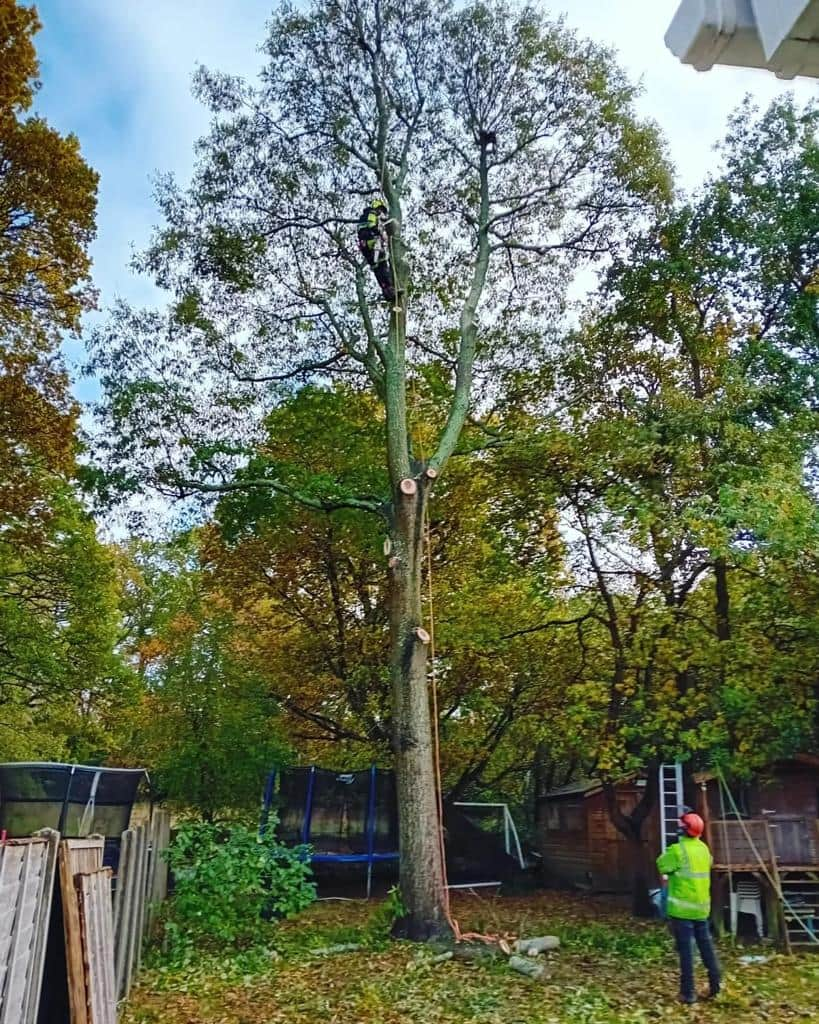
After a tree has been felled, leaving the stump in place may initially seem harmless. However, an old stump can remain a practical obstacle, affect the appearance of the garden and create ongoing maintenance problems.
Although some stumps gradually decay without causing serious issues, others produce new growth, attract insects or interfere with plans for the surrounding area. Understanding the possible problems can help you decide whether professional stump removal is appropriate.
Why an Old Tree Stump May Become a Problem
The effect of a stump depends on its size, species, condition and position. A small stump in a quiet corner may cause little inconvenience, while a large stump near a lawn, path or patio can restrict how the space is used.
A professional assessment can determine whether the stump is likely to decay naturally or whether grinding it below ground level would provide a more practical solution.
It Can Take Up Valuable Garden Space
A stump may occupy more usable space than its visible size suggests. Its surrounding roots and uneven ground can make mowing, planting and general garden maintenance more difficult.
Removing the stump can make it easier to:
- Extend or reinstate a lawn
- Create a new planting area
- Prepare for a path or patio
- Improve access through the garden
- Produce a cleaner and more open layout
Stump grinding is particularly useful where the aim is to reclaim the area without excavating the entire root system.
New Shoots May Continue to Appear
Felling a tree does not always stop it from growing. Some species can produce fresh shoots from the remaining stump or roots, resulting in clusters of unwanted growth.
Repeatedly cutting these shoots may control their appearance temporarily, but it does not necessarily prevent them from returning. Grinding the stump can remove the main source of regrowth and make the area easier to maintain.
Decaying Wood Can Attract Insects
As a stump deteriorates, its softening wood can provide shelter and feeding material for insects and other small organisms. Decomposition is a natural process, but it may be undesirable when the stump is close to frequently used parts of the garden.
Removing most of the woody material through stump grinding reduces the amount of decaying timber left at surface level. This can create a tidier environment and prevent the stump from becoming an established habitat in an inconvenient location.
Fungal Growth May Develop
Moist, decaying timber can support fungal growth. Brackets or mushrooms appearing around a stump are often signs that decomposition is progressing below the surface.
The presence of fungi does not automatically mean nearby healthy trees will be affected. However, fungal activity should be assessed if there are concerns about other woody plants or if the original tree was removed because of decay.
Professional inspection can help distinguish ordinary decomposition from an issue requiring further attention.
The Stump May Become a Trip Hazard
Low stumps can be difficult to see, particularly when grass or surrounding plants grow around them. Exposed roots may create additional uneven areas across lawns and pathways.
This can be particularly inconvenient in gardens used regularly by children, visitors or anyone with reduced mobility. Grinding the stump below the surrounding ground level can remove the main obstruction and allow the area to be finished more evenly.
It Can Damage Garden Equipment
Hidden stumps and surface roots can obstruct lawnmowers, strimmers and other gardening equipment. Contact with hard wood may damage cutting components and make routine maintenance unnecessarily difficult.
Even when the stump is clearly visible, mowing around it repeatedly can leave awkward edges that require additional trimming. Removing the obstruction allows the ground to be maintained more efficiently.
Old Roots Can Affect Future Garden Plans
Although roots usually begin to decline after a tree is felled, larger sections can remain underground for a considerable time. They may interfere with digging, planting or preparing the ground for a new surface.
Stump grinding does not remove every root from the soil. Instead, it breaks down the stump and its main upper roots to an appropriate depth. The required depth should be based on how the area will be used afterwards.
Natural Decay Can Leave Uneven Ground
As the stump and roots decompose, the soil above them may settle. This can create depressions or soft areas in an otherwise level lawn.
Where landscaping work is planned, relying on natural decay may delay the project and make ground preparation less predictable. Removing the stump and preparing the area correctly provides a more stable starting point for the intended use.
Why Professional Stump Grinding Matters
Effective stump removal involves more than reducing the visible wood. The operator must consider access, stump diameter, surrounding surfaces, nearby plants and the intended depth of grinding.
Professional stump grinding offers a controlled way to remove the obstruction while limiting unnecessary disturbance to the rest of the garden. The resulting wood material can then be cleared or managed according to how the space will be finished.
Conclusion
An old tree stump can occupy valuable space, produce unwanted shoots, support insects and fungi, create a trip hazard and interfere with future garden improvements. While not every stump requires immediate attention, removal is often worthwhile when it restricts the safe and practical use of the area.
LM Tree Surgery Bognor Regis provides professional stump grinding for properties in Bognor Regis, West Sussex. If an unwanted stump is affecting your garden, contact the team to arrange an assessment and discuss the most suitable way to reclaim the space.
Call us on: 01243 973 494
Click here to find out more about LM Tree Surgery Bognor Regis
Click here to complete our contact form and see how we can help with your tree needs.