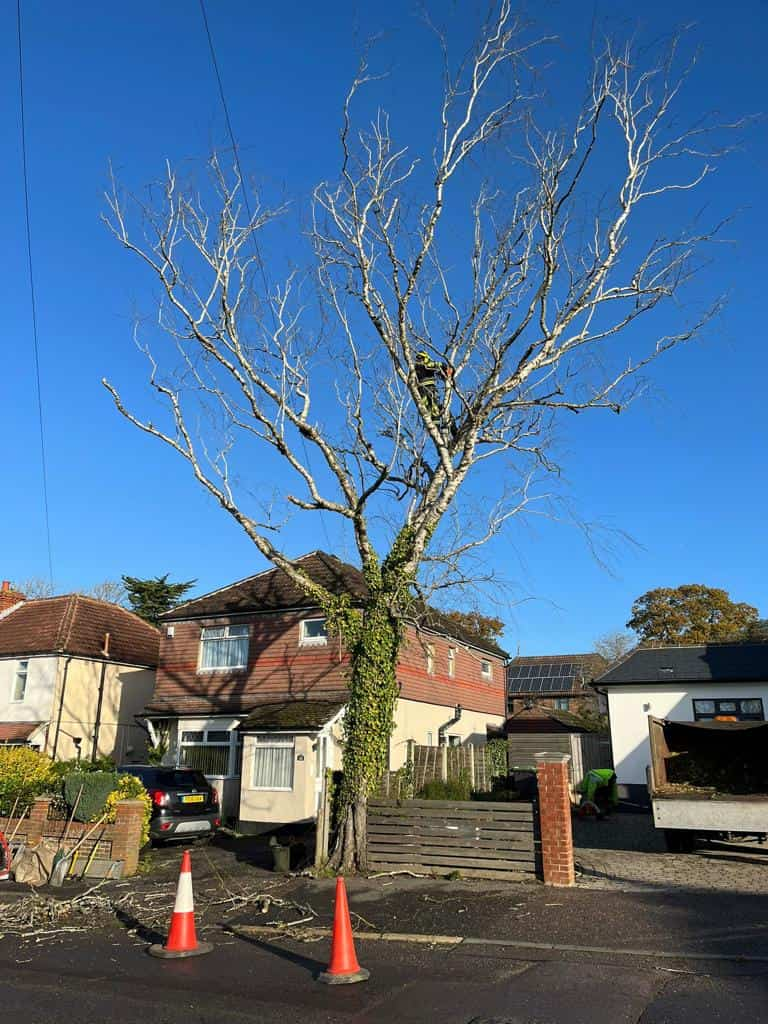
After a tree has been felled, the remaining stump can be easy to overlook. However, an old tree stump may gradually become more than an eyesore, affecting how you use your garden and creating practical maintenance problems. Depending on its size, condition and location, it can also attract unwanted pests or interfere with plans for landscaping.
For homeowners in Bognor Regis, West Sussex, understanding the potential problems associated with an old tree stump can help you decide whether removal is worthwhile. Although some stumps can be left to decay naturally, others may benefit from professional stump grinding or removal.
Why Can an Old Tree Stump Become a Problem?
It Can Attract Insects and Other Pests
As a tree stump decays, the wood becomes softer and may provide shelter or a food source for certain insects and other organisms. Depending on the surrounding conditions, decaying wood can attract wood-boring insects, ants and other invertebrates.
Not every stump will cause a pest problem, and many organisms play a natural role in breaking down dead wood. However, if a stump is close to garden structures or the decaying timber is attracting unwanted activity, it may be sensible to have the situation assessed.
Removing the stump can eliminate that particular source of decaying wood and make the surrounding area easier to maintain.
It Can Create a Trip Hazard
Tree stumps can be difficult to see when grass, weeds or other plants grow around them. This can make them a potential trip hazard, particularly in gardens used by children, older people or visitors.
Even a low stump can catch someone’s foot or obstruct lawnmowers and other garden equipment. The risk may increase when the stump is hidden by vegetation or located beside a frequently used path.
Stump grinding can reduce the visible stump to below ground level, helping create a more accessible and practical garden space.
It Can Encourage Unwanted Regrowth
Some tree species can produce new shoots from a remaining stump or its roots after the main trunk has been cut down. These shoots may continue to appear even when the original tree has been removed.
Repeatedly cutting back the new growth can become an ongoing maintenance task. Depending on the species and the condition of the root system, stump grinding or another suitable removal method may help address the problem more effectively.
A professional assessment can help determine the best approach, particularly if regrowth has become persistent.
It Can Limit Garden Landscaping
An old stump can restrict how you use part of your garden. It may prevent you from levelling the ground, laying a lawn, creating a planting bed or installing a new garden feature.
The roots may also occupy space beneath the surface, making excavation and planting more difficult. While smaller roots will gradually decay, this process can take considerable time and may not suit plans that require the area to be prepared sooner.
Removing the stump can make the space easier to redesign, although the amount of below-ground material left behind will depend on the method used.
It Can Contribute to Fungal Growth
Fungi naturally break down dead wood, so mushrooms or other fungal growth may appear around an old stump as it decays. This is part of the natural decomposition process and does not automatically mean nearby plants or trees are unhealthy.
However, fungal growth can sometimes indicate that wood is decomposing extensively. If you notice unusual fungal growth around the base of a living tree or signs of deterioration nearby, a professional assessment can help establish whether further investigation is needed.
Avoid handling unfamiliar fungi, particularly where children or pets use the garden.
What Is Tree Stump Grinding?
Tree stump grinding is a method of reducing a remaining stump using specialist machinery. The stump is ground into small wood fragments, usually to a depth that allows the area to be covered with soil or prepared for suitable landscaping.
Unlike complete stump and root removal, grinding generally leaves the deeper root system in the ground. These roots then decay naturally over time.
The most suitable method depends on the stump’s size, its location, access to the garden and how you intend to use the space afterwards. A professional can explain what the process will involve and whether additional ground preparation is needed.
When Should You Consider Stump Removal?
Removing a stump may be worth considering if it obstructs a pathway, creates difficulties when mowing, produces repeated unwanted shoots or prevents you from improving your garden.
Its condition and location also matter. A stump near frequently used areas may need more immediate attention than one in an unused corner where natural decay is acceptable.
If you are unsure whether to leave the stump or arrange removal, consider how it affects safety, garden maintenance and your plans for the space.
Professional Tree Stump Services in Bognor Regis
Removing a stump can involve specialist machinery and careful consideration of nearby structures, planting and underground obstacles. Attempting to dig out a large stump without suitable equipment can be physically demanding and may disturb more of the garden than necessary.
LM Tree Surgery Bognor Regis can help homeowners in Bognor Regis, West Sussex, assess old tree stumps and identify a suitable removal method. Professional advice can help you understand what is involved and how the area can be left ready for its intended use.
Conclusion
An old tree stump can affect garden safety, attract certain pests, encourage unwanted regrowth and restrict landscaping plans. Although natural decay may be suitable in some situations, removing a stump can make the garden easier to maintain and create more usable space.
If a tree stump is causing problems in your garden in Bognor Regis, West Sussex, contact LM Tree Surgery Bognor Regis to discuss your requirements and arrange a suitable assessment.
Call us on: 01243 973 494
Click here to find out more about LM Tree Surgery Bognor Regis
Click here to complete our contact form and see how we can help with your tree needs.